Shareforce
The Contract Operating System
Orchestrating Legal Content
Shareforce is the first true legal operating system for legal content collaboration, automation and distribution. It is the foundational layer that manages a firm’s contract content between applications, users and data.
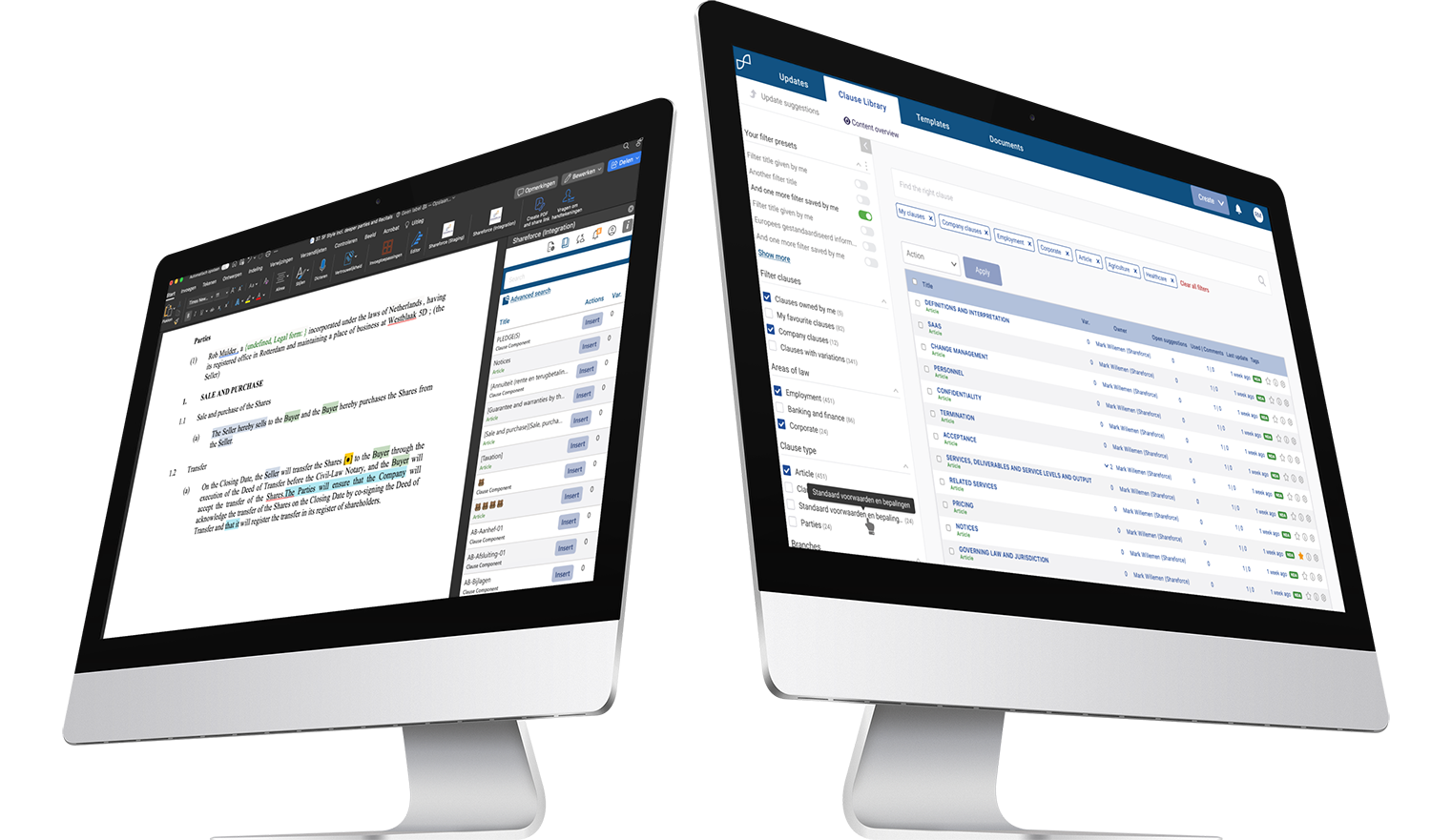
Single Source of Truth
One clause database. Every template. Every document. Every department. Every country.
Your entire organisation pulls from one approved clause library. No more version confusion, scattered Word files, or old clauses sneaking into new contracts.
Experts are in control: push updates instantly to all documents and systems.
Perfect consistency across all legal work with real-time compliance.
No-Code Document Automation
Create automated workflows using your clause library, templates and playbooks. Then map your data directly to the automated contract assembly to transform bespoke agreements into fully automated contracts.
Results:
- Cut contract generation time by 75%+.
- Zero coding: remove dependence on external counsel or IT.
- Enable self-service within your guardrails.
- Scale complex contracts without hiring more staff.
- All available in MS Word.
Contract Data Intelligence
AI insights built from the ground up, not scraped from finished contracts.
We capture structured data the moment you build contracts.
Legacy analysis pulls critical data from existing contracts. Forward Intelligence makes every new contract structured data automatically.
Get deeper visibility into risk patterns, clause performance, and compliance gaps before they bite you.
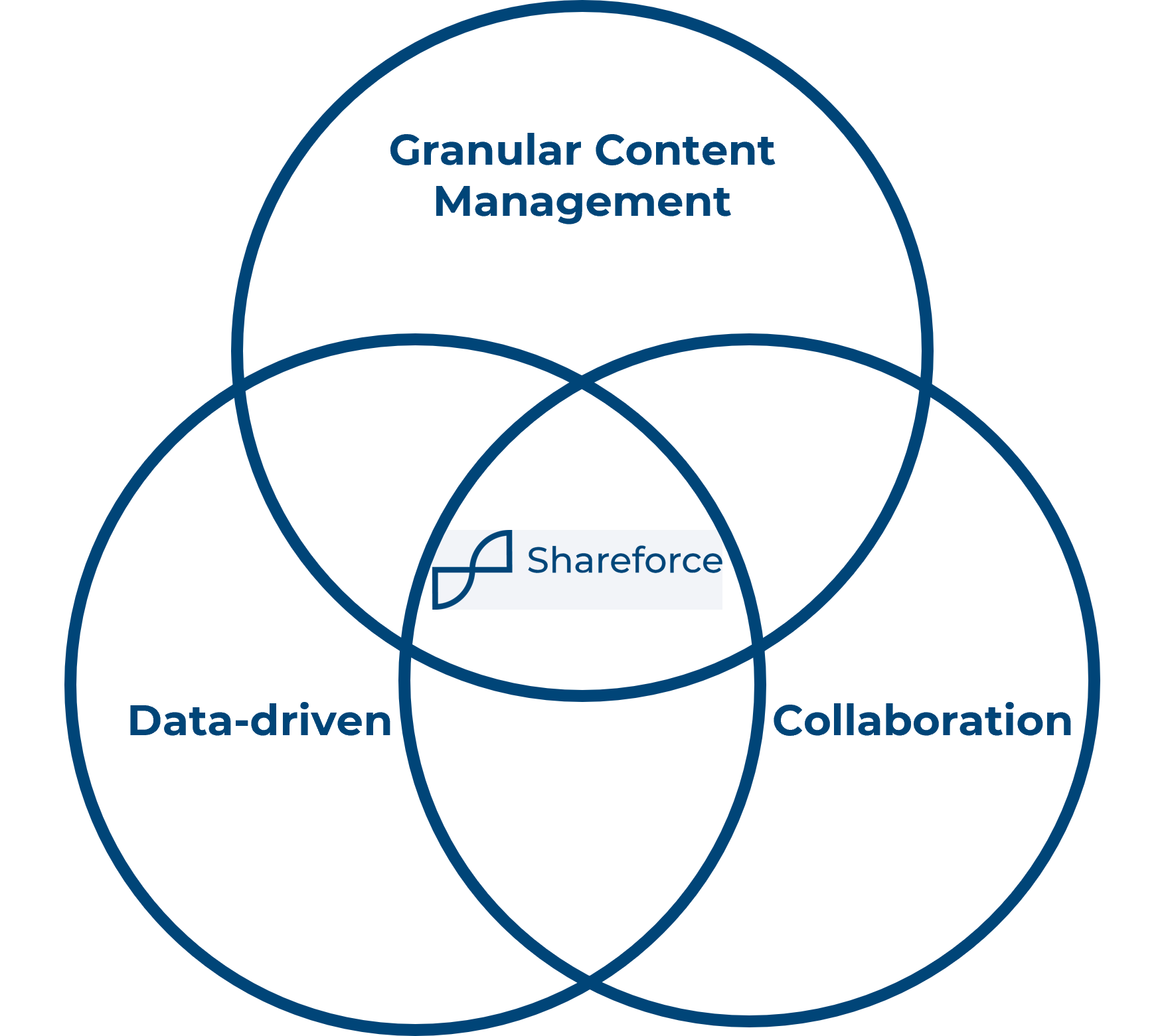
- Collaborate and version like GitHub
- Create and distribute like WordPress
- Data-driven document assembly by Shareforce
BuiIding Contracts Like Software
Your legal knowledge, structured like code.
We combine the governance of software development and the modularity of content management to build your legal infrastructure foundation:
- Every clause is a reusable, versioned building block (like software repositories).
- Automated workflows check, test and deploy your changes (like software pipelines)
- Updates are tracked, approved and distributed automatically (like pull requests).
- Templates are modular and dynamic (like a CMS).
- Data flows in from business systems to auto-generate documents at scale.
Modular Documents
Think components, not documents.
Work with multipurpose clause components that adapt automatically to different contexts. One blueprint per clause serves multiple document types with automatic context switching. Maintain core components instead of hundreds of static files.
Dynamic Documents
Documents that update themselves.
Every template grabs the most current clause versions in real-time.
No hunting for the “latest version.”
Teams always work with current, compliant content.